LEARNING AND ROUTINES / ANKIDROID
AnkiDroid can make a short study session more structured, but it cannot decide what is worth learning for you. Evaluate the quality of the cards before judging the length of the streak.
A useful candidate for repeatable recall practice; begin with a small, relevant deck.
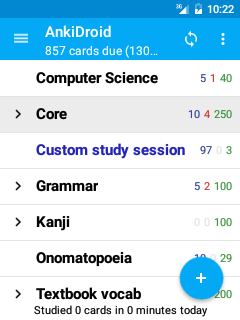
The role of the application
AnkiDroid is the Android client for the Anki spaced-repetition system. Its scheduling model helps decide when cards return, but the content of those cards remains a separate responsibility. Start with material you understand and want to recall. A large shared deck is not automatically a good fit simply because it contains many facts.
Keep each question answerable
Write a prompt with a clear answer and enough context to avoid ambiguity. If a card asks for several unrelated details, split the task or rewrite it. A card that repeatedly confuses you may have a design problem rather than proving that you have failed to study. Use the underlying lesson or source to understand the material before expecting a flashcard to reinforce it.
Fit the routine to available time
Choose a modest starting collection and allow a normal study session to reveal its workload. Do not add a large batch merely because the first day feels easy. New material can create future review obligations. A sustainable routine should fit ordinary days, including busy ones, rather than depending on an unusually motivated weekend.
How to assess the fit
Try a small collection for a limited period and notice whether the prompts help you retrieve useful knowledge outside the app. Keep your original material and learn the documented backup or export route. This is an editorial assessment, not a claim of improved exam scores. The application is most useful when good questions, relevant content and a realistic routine work together.