LEARNING AND ROUTINES / LOOP HABIT TRACKER
A habit tracker should make a routine easier to notice, not turn ordinary life into a performance dashboard. Loop’s focused approach is worth evaluating with one small behaviour.
Shortlist it when a simple record and reminders are enough.
Define the behaviour before the app
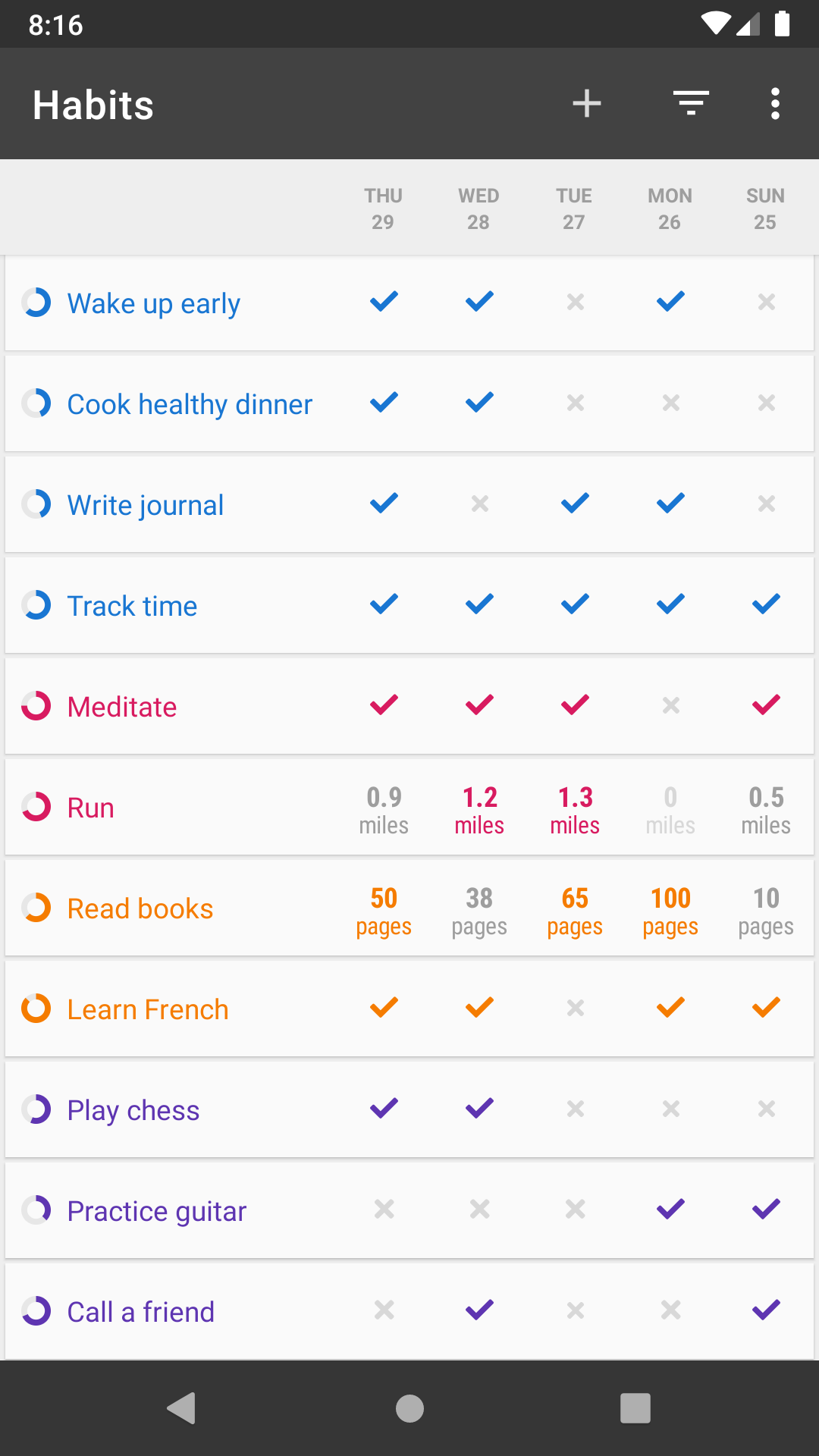
Loop’s official site highlights reminders, charts and statistics in a free, open-source app. Those tools become useful only after you define what you want to record. Choose an observable action such as reading a few pages, rather than an abstract aim such as becoming more organised. A clear definition reduces the amount of judgement required each time you open the tracker.
Make the first version small
Begin with one or two routines that already have a natural place in your day. Adding many ambitions creates an attractive dashboard but also a large maintenance burden. Pick a reminder that coincides with a realistic opportunity to act. If the reminder always arrives when action is impossible, move it rather than treating repeated dismissal as useful feedback.
Read a chart as a question
A gap in the record can prompt you to ask what changed: the timing, the environment or the size of the task. It is not a complete explanation of your motivation or wellbeing. Avoid using a streak as the only measure of progress. A useful record supports reflection without making a missed day feel like the loss of all previous effort.
The practical verdict
Consider Loop when you want a focused personal record rather than coaching, a social competition or an elaborate planning suite. Try the smallest useful setup and review whether it helps you notice patterns. This review does not make a health or productivity guarantee. The app earns its place when recording the behaviour takes little effort and leads to a sensible adjustment.