OUT AND ABOUT / ORGANIC MAPS
Finding a place while travelling is easier when you have already checked how its name appears on the map. A little preparation can prevent a long search at an inconvenient moment.
Use offline search as part of a prepared itinerary, with important addresses kept separately.
Begin with the downloaded area
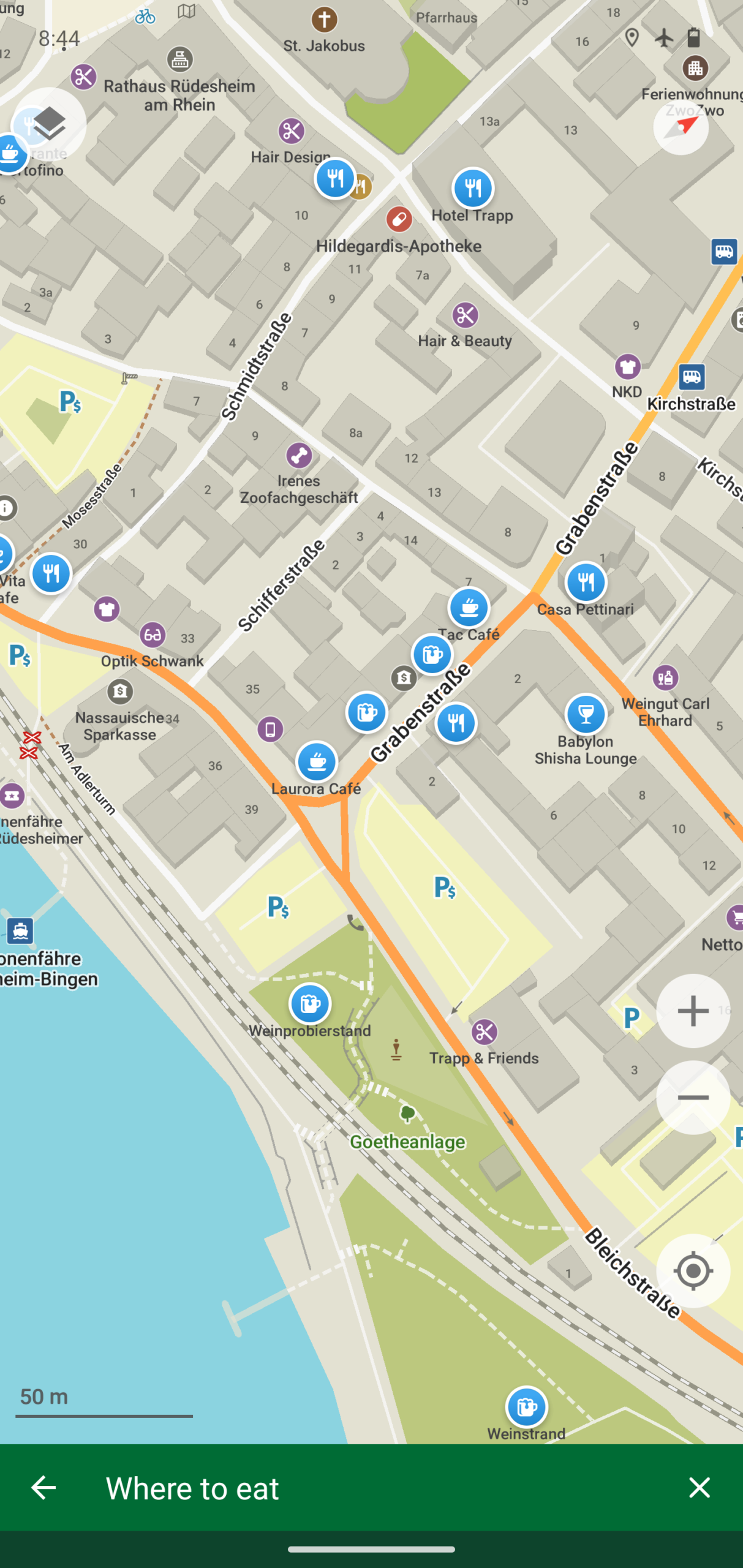
Organic Maps documents search within downloaded maps. Confirm that the relevant region is available before treating the search as an offline fallback. A useful check uses a place you already know so you can recognise the result. Do not wait until arrival in an unfamiliar area to discover that you downloaded the wrong region.
Search for more than one clue
A business may be listed under a local spelling, an abbreviated name or a nearby address. Keep the address from a reliable source instead of depending solely on the name used in a travel article. If a result seems plausible, inspect its position and surrounding landmarks. A matching label is a clue, not proof that it is the exact entrance or destination you need.
Save only what helps the day
Prepare a short collection of relevant places and give yourself enough context to recognise each one later. Include an arrival point and a way back, not just attractions. Avoid filling the map with dozens of unprioritised possibilities. The purpose is to reduce decisions when you are tired or disconnected, not to reproduce every result you found online.
Keep changing details separate
A saved place does not guarantee current hours, access or services. Confirm time-sensitive information with the venue or another current primary source. Our recommendation is a two-part approach: use the map for geographical orientation and keep essential logistical facts in a separate note. That combination is often more useful than asking one application to answer every travel question.